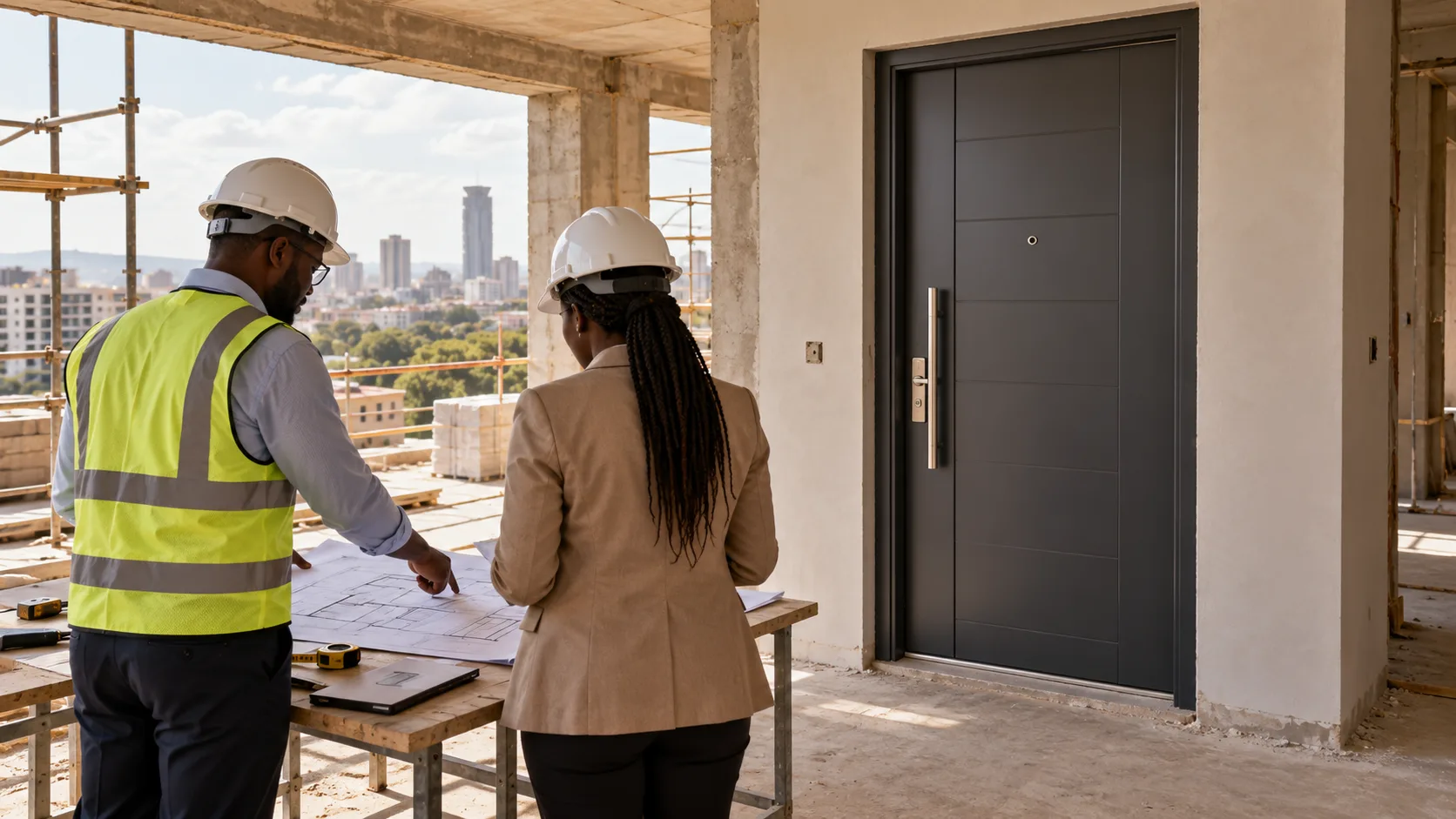
A project quotation is useful only when each supplier prices the same opening, configuration and delivery scope. For a Kenya building project, start with a door-by-door schedule and mark what is confirmed, provisional or still awaiting design approval. A country label alone does not define a suitable door set; the project brief, site conditions and responsible design team do.
1. Build One Record for Every Door Mark
Give each opening a unique mark and repeat it consistently on drawings, schedules, sample labels and correspondence. At minimum, record:
- Building, floor, room or elevation, and the quantity for that exact configuration.
- Finished opening width and height, wall type and thickness, floor build-up, threshold and required clear passage.
- Handing and swing direction, shown on a small plan or elevation rather than left to an ambiguous left/right note.
- Door leaf, frame, glazing or louvre requirements, finish reference and any exposure or cleaning conditions stated by the project team.
- Lock, hinges, closer, viewer, access-control preparation and the party responsible for each interface.
- Required performance, the document that will demonstrate it, and the person who will accept the evidence.
Label site-measured dimensions separately from design dimensions. If the opening has not been surveyed, flag the size as provisional and state who will verify it before production. For a field-by-field example, use the door opening survey guide.
2. Attach Drawings That Resolve Interfaces
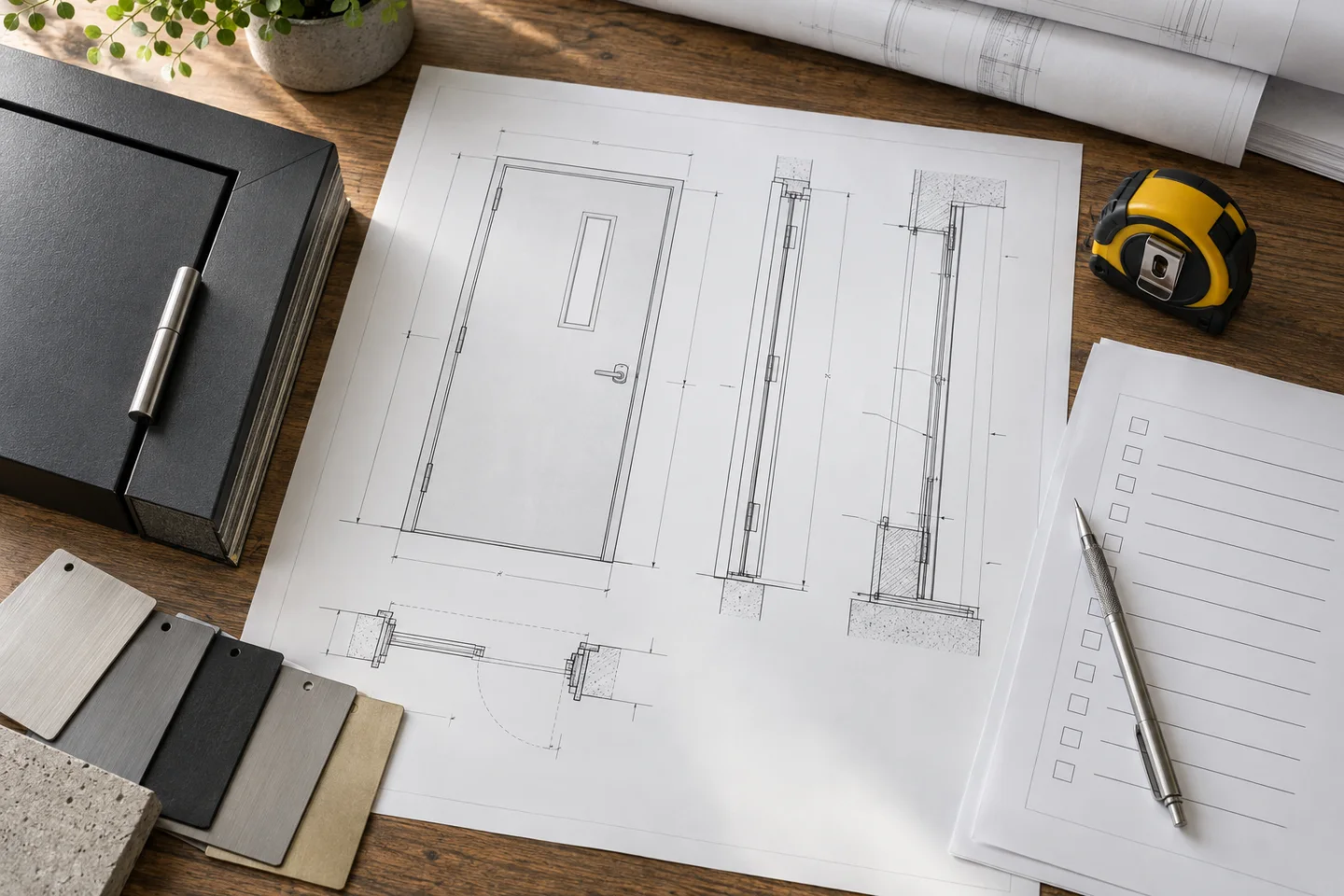
Send a door elevation and the head, jamb and sill details where those interfaces affect the order. Show the supporting wall, frame position, finished floor relationship and threshold. Add a hardware schedule or a clearly stated performance brief. If wiring, reader mounting or power supply is by others, identify the boundary on the drawing.
The goal is not to prescribe an unverified fixing detail. Ask the supplier to identify the installation information for the proposed construction, then have the project professional confirm that it suits the wall and site. The security door RFQ drawing package explains which records help suppliers identify missing inputs.
3. Request Configuration-Specific Evidence
List security, fire, acoustic, weather or other requirements as separate project lines. Ask what evidence is available for the proposed door-set configuration and whether the report matches the size, frame, hardware, glazing and installation conditions being offered. Do not treat a product-family brochure or a rating from a different configuration as automatic approval.
Where local codes, approvals or project specifications apply, identify the responsible consultant or authority and request confirmation through the project process. The supplier can provide product information for review, but the project team must decide what meets its requirements. See the guide to security door ratings and certifications for a document-matching approach.
4. Compare Quotations on the Same Basis
Ask each bidder to separate confirmed scope, options, exclusions, assumptions and unresolved questions. Compare these items line by line:
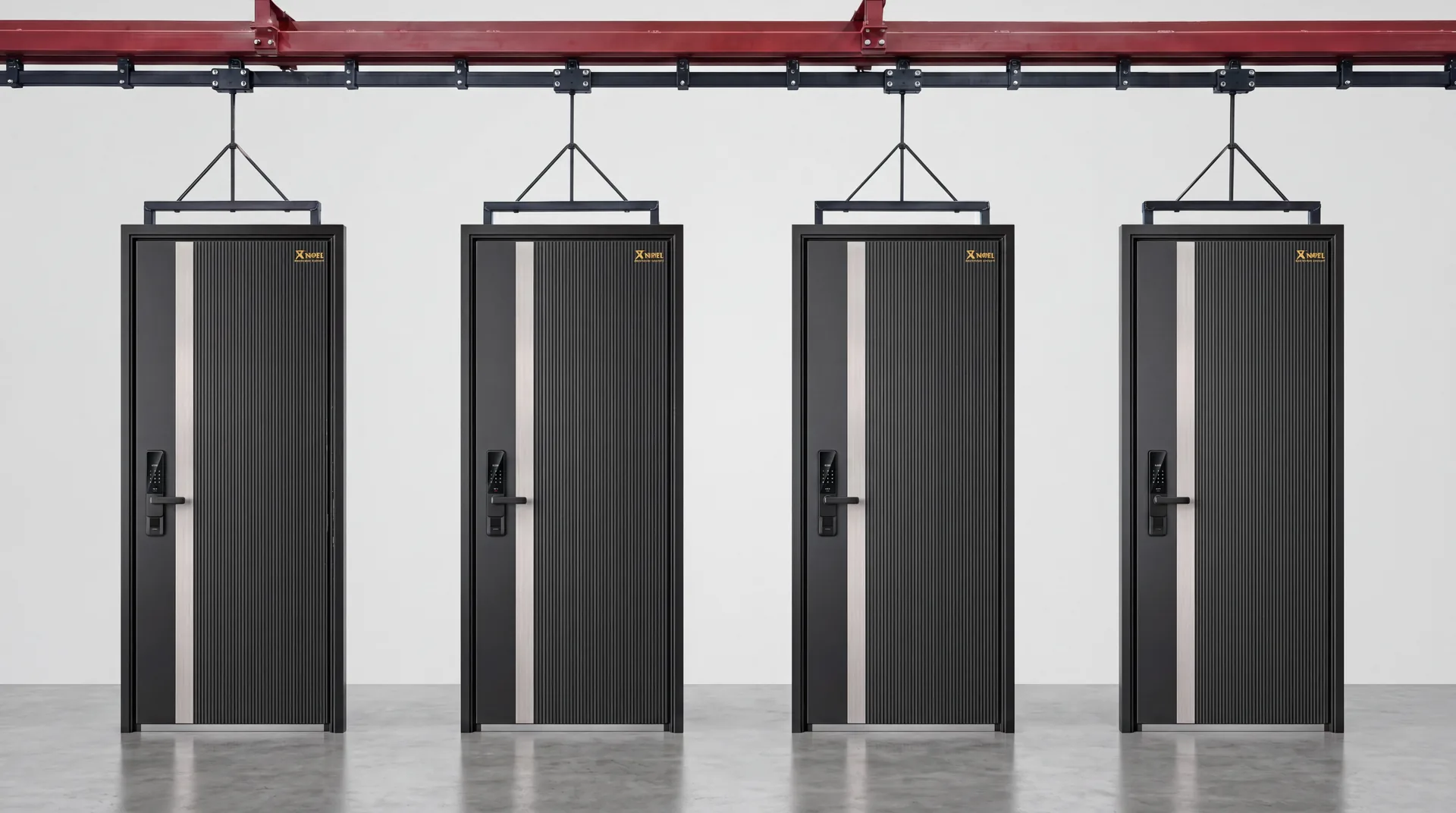
- Door and frame construction, finish, hardware and any access-control preparation.
- Sample or mock-up requirements, approval owner and whether an approved sample is retained.
- Packing and marking method, delivery point, unloading responsibility and phased quantities.
- Installation, commissioning, training, warranty documentation and spare-parts information, when included.
- Evidence submitted, documents still pending and any proposed substitute that needs written approval.
An apparent price difference may be a scope difference. Put the same schedule and revision in front of every supplier and record any deviation beside the relevant door mark.
5. Close the Approval Loop Before Release
Use a simple register with columns for door mark, drawing revision, sample status, technical submittal, open question, owner, due date and approval. Before production release, close the items that affect dimensions, handing, hardware, finish and required evidence. If a late site change affects one opening, revise that line and its drawing instead of silently changing the whole package.
### What should a first RFQ include?
At minimum, provide the opening schedule, available drawings, project performance brief, required delivery stages and a list of decisions still open. A budget request can use provisional dimensions if they are clearly labeled.
### Does a supplier quotation confirm code compliance?
No. Price, technical evidence and project acceptance are separate steps. The responsible project professional must confirm applicable requirements and acceptance.
Send a Reviewable Project Brief
For a configuration discussion, send the project location, building use, door marks, quantities, drawings, required performance, hardware scope and target delivery stages through the WONLY project enquiry page. The team can then clarify which product information or inputs are needed for the next review; final configuration, evidence and availability must be confirmed for the specific project.