Buying Guide
Smart Lock OEM/ODM Buyer Guide: Samples, Firmware and Compliance
25 September 2026
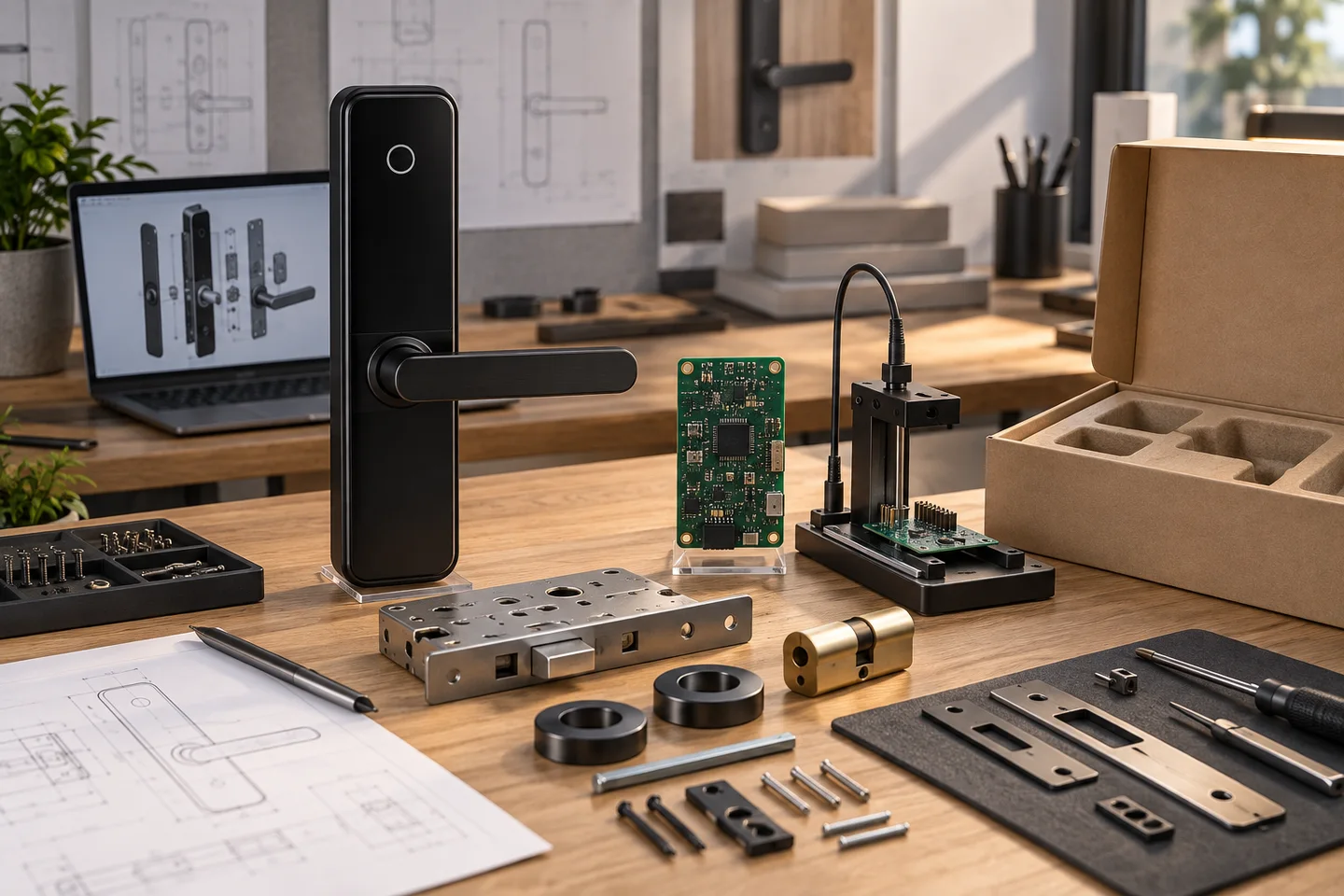
Define the product, software, compliance and support responsibilities before approving an OEM or ODM smart lock programme.
An OEM/ODM smart lock programme combines mechanical hardware, electronics, firmware, credentials, mobile software, cloud services, packaging and after-sales support. Buyers should approve the complete operating system, not only the appearance of a sample.
Start with the WONLY smart lock OEM/ODM programme overview to define the target segment, door compatibility, credential mix, branding, compliance and service scope before sampling.
Define OEM and ODM Scope
- Record which existing platform, housing and lock body will be used
- Separate branding changes from new mechanical, electronic or software development
- Assign ownership of drawings, tooling, firmware, app accounts and product data
- Define target doors, users, markets, languages and access methods
Build a Production-Intent Sample
The approved sample should use the intended lock body, reader, motor, batteries, finish, firmware and packaging. Test it on representative doors with realistic alignment and tolerances. Record every hardware, firmware and drawing revision so the golden sample can control production.
Review Access and Failure Scenarios
- Test every approved credential and administrator workflow
- Confirm offline operation, time synchronisation and event storage
- Simulate low battery, depleted battery, power recovery and emergency access
- Test repeated failed attempts, tamper alarms and forced-entry signals
- Define account transfer, credential deletion and factory reset
Clarify App, Cloud and Data Responsibility
Confirm who operates the app and backend, where data is processed, how accounts are created and what happens if a service changes. Document API or gateway interfaces, update policy, supported operating systems, privacy roles, log retention and vulnerability-response ownership. Do not assume a branded app means the buyer controls the service.
Map Compliance to the Exact Variant
Radio, electrical safety, materials, cybersecurity and lock-performance requirements vary by destination and product architecture. Match reports and certificates to the exact model, radio module, power supply and firmware family. The buyer and supplier should agree who obtains local approvals and who controls later changes that may affect them.
Audit Production Controls
- Incoming checks for lock bodies, motors, sensors, PCBs, batteries and finishes
- Programming controls that prevent incorrect firmware or keys
- End-of-line functional tests for credentials, motor, alarms and communications
- Cycle, environmental and door-fit verification appropriate to the intended use
- Traceable batch or serial records linking components, firmware and results
Control Changes After Approval
Require written notice and impact review before changing components, firmware, factories, sub-suppliers, materials or test methods. Define which changes require a new sample, regression testing or renewed compliance evidence. Version control protects both supply continuity and field compatibility.
Agree Commercial and Support Terms
Compare quotations on the same specification, tooling, testing, certification, packaging and software scope. Agree sample approval, warranty handling, spare parts, firmware support, defect analysis, replacement compatibility and end-of-life notice. MOQ and lead time should be confirmed for the approved configuration rather than copied from a generic catalogue.
FAQ
What is the difference between smart lock OEM and ODM? OEM commonly adapts an existing platform to the buyer's brand or specification; ODM may include deeper product design. Actual responsibility must be defined contractually because suppliers use the terms differently.
What should be frozen before mass production? Freeze the mechanical configuration, electronics, firmware, access methods, finish, labels, packaging, compliance scope, test plan and approved golden sample.