Buying Guide
Smart Door Manufacturer OEM Integration Checklist
23 September 2026
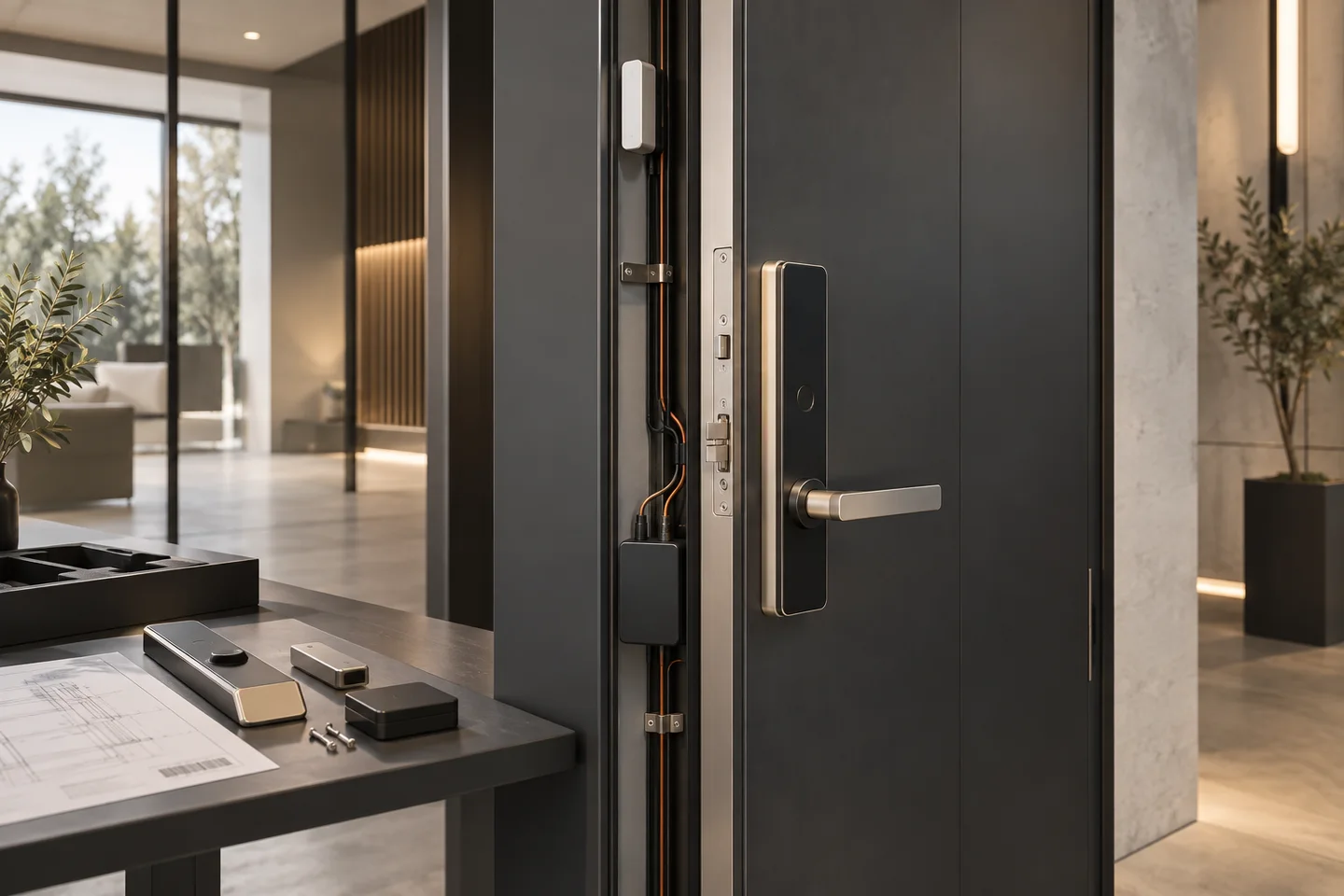
Define interfaces, ownership and acceptance tests before sourcing an OEM smart door system for a project or product range.
A smart door is a coordinated entrance system, not a conventional door with a connected lock added at the end. Door structure, locking, power, sensors, controls, software and installation must work together through normal use, power loss, network interruption and emergency conditions. Buyers should define these interfaces before selecting a smart door manufacturer.
WONLY's smart door manufacturer overview provides the corresponding project brief for door construction, access methods, power, connectivity, safety and after-sales responsibility.
Freeze the Use Case First
- Identify villa, apartment, hotel, office or mixed-use applications
- Define users, traffic, exposure, accessibility and required security level
- Separate essential local functions from optional cloud features
- Record destination-market electrical, radio, building and fire requirements
Assign System Responsibility
Create a responsibility matrix covering the door leaf, frame, hinges, lock, closer or operator, power supply, battery backup, sensors, cabling, gateway, app and building-management interfaces. Each item needs one owner for design, supply, testing, documentation and warranty. Gaps between vendors become site failures.
Coordinate Mechanical and Electronic Design
The approved drawing should show lock preparation, reinforcement, cable routes, flexible loops, sensor positions, service access and protected connectors. Confirm tolerances under door weight, temperature and installation variation. Electronics must remain serviceable without damaging the finished leaf.
Define Access and Failure Behaviour
- List fingerprint, face, palm-vein, PIN, card, key and app methods actually required
- State what remains available without internet or gateway connection
- Define low-battery warnings, backup power and mechanical emergency access
- Document behaviour during power loss, alarm, forced entry and sensor failure
- Confirm privacy, credential administration, logs and account handover
Verify Compatibility Before Tooling
Use an engineering sample to test the complete opening rather than checking components separately. Cycle the door and lock, verify alignment and latch engagement, test every credential method, simulate low power and network loss, and confirm any access-control or home-automation interface. Record firmware, hardware and drawing revisions on the approved sample.
Control OEM Changes
Branding, finishes, handles, display language, packaging, app identity and firmware options require separate approval. Clarify ownership of tooling, interface specifications, software accounts, certificates and product data. No component, firmware or supplier change should enter production without documented impact review.
Plan Production and Quality Checks
- Incoming inspection for critical mechanical and electronic components
- In-process checks for dimensions, wiring, insulation and connectors
- Functional end-of-line test using the final lock and door configuration
- Traceable serial or batch records for doors, locks and firmware
- Packing that protects finishes while keeping matched components together
Prepare Installation and After-Sales Support
The manufacturer should provide opening conditions, anchoring details, wiring diagrams, commissioning steps, administrator handover and troubleshooting guidance. Agree spare parts, firmware support, replacement compatibility and escalation ownership before launch. Project installers need training on both mechanical adjustment and electronic commissioning.
Build Acceptance Around Scenarios
Final acceptance should reproduce real events: authorised entry, failed credential, door held open, obstruction, forced entry, low battery, power failure, network loss and recovery. A signed scenario test is clearer than a generic statement that the door is “smart”.
FAQ
Should the door and smart lock come from one manufacturer? Not always, but one party must own system integration and prove the combined configuration. Separate suppliers require a precise interface and warranty matrix.
What is the most important OEM sample test? Test the complete, production-intent doorset through mechanical cycles and failure scenarios, with the exact hardware, firmware and power architecture intended for delivery.