Buying Guide
Security Door Manufacturer Factory Audit Checklist for Project Buyers
18 September 2026
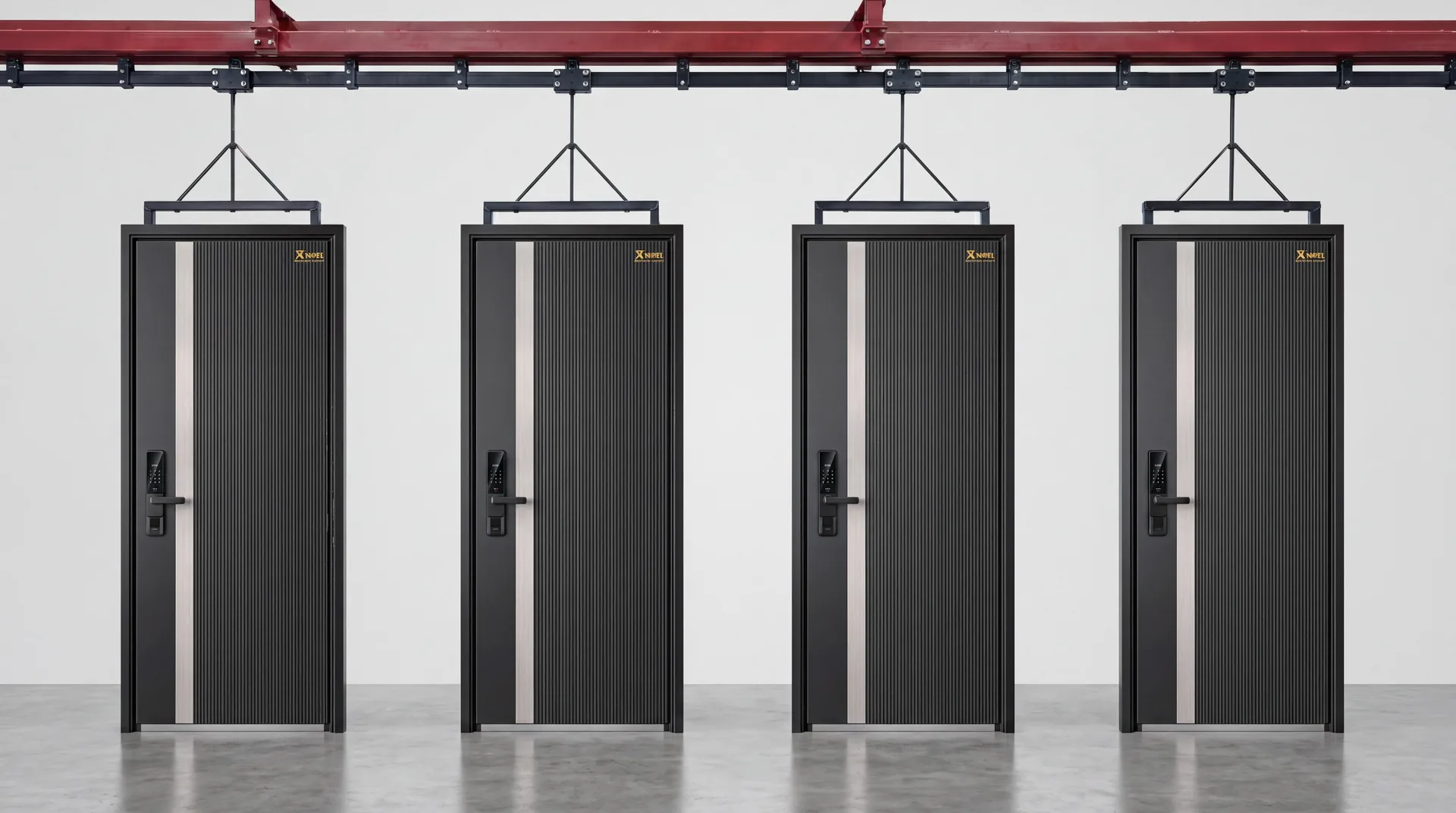
Verify engineering, materials, testing, quality control and delivery evidence before selecting a security door manufacturer for a project.
A polished catalogue does not prove that a factory can repeat the same doorset across hundreds of openings. Project buyers need evidence that links the approved sample to incoming materials, production controls, testing, packing and delivery. This checklist helps procurement teams compare security door manufacturers on verifiable capability rather than presentation alone.
Use the checklist alongside WONLY's security door manufacturer capability overview, which maps the information needed for project specification, OEM review and export delivery.
For offices, hotels, apartment common areas and public buildings, the commercial steel security door project guide turns the same controls into an opening-by-opening schedule covering hardware, access control, fire and egress.
Confirm the Manufacturer and Project Scope
- Verify the legal company name, factory address and whether production is owned, subcontracted or mixed
- Define door quantities, opening sizes, handing, wall conditions, finishes, hardware and destination markets
- Ask which processes are completed in-house and which depend on approved external suppliers
- Confirm who owns drawings, samples, change control and final technical approval
Review Engineering Before Production
A capable security door manufacturer should convert the schedule into controlled drawings and a bill of materials. Check how the team manages frame-to-wall interfaces, clear openings, thresholds, hinges, lock preparation, electrical routes and tolerances. Request a signed sample approval process so later substitutions cannot be treated as equivalent without review.
Trace Materials and Components
- Match declared steel or aluminium grades and thicknesses to purchase and inspection records
- Record the approved lock, cylinder, hinges, seals, glazing and reinforcement configuration
- Check batch identification for critical materials and finished doors
- Verify how non-conforming materials are isolated and dispositioned
Check Test Evidence Against the Exact Doorset
Do not accept a certificate based only on a similar product name. Compare the tested specimen with the proposed leaf construction, frame, dimensions, hardware and installation method. For fire, acoustic, burglary-resistance, wind or weather requirements, confirm the applicable standard, laboratory, report scope and permitted variations. Local approval requirements must be confirmed with the project consultant or authority having jurisdiction.
Walk the Production Control Points
- Incoming inspection for metal, cores, hardware and finishes
- Cutting, forming and welding controls, including jigs and dimensional checks
- Surface preparation, coating or finishing records and colour approval
- Hardware installation, alignment, opening force and functional checks
- Final inspection against the approved drawing and packing list
Test Capacity and Delivery Readiness
Ask for realistic weekly capacity for the specified construction, not total factory nameplate capacity. Review the production plan, critical component lead times, spare-parts policy, packaging method and container-loading controls. The supplier should explain how it manages phased delivery, site changes and replacement units without losing configuration history.
Audit Quality Records and Corrective Action
Sample recent inspection reports, calibration records, non-conformance logs and corrective actions. Look for closed evidence: the problem, root cause, containment, permanent action and verification. A factory that records defects and prevents recurrence is safer than one claiming that defects never occur.
Score Commercial Risk Separately
Price should be evaluated with specification compliance, tooling, samples, testing, packing, freight assumptions, warranty, spare parts and change costs. Compare offers on the same scope. A low unit price can become expensive when missing hardware, unclear exclusions or unapproved substitutions appear after award.
Build the Audit into the Purchase Order
Convert agreed evidence into contractual checkpoints: approved drawings, golden sample, material list, inspection and test plan, pre-shipment inspection, document pack and change approval. This creates a traceable path from factory audit to delivered opening and gives both buyer and manufacturer a clear acceptance standard.
FAQ
Should every security door project require an on-site factory audit? Risk should determine the depth. Large quantities, regulated doorsets, custom engineering or a new supplier usually justify an on-site or independent audit. Repeat orders may use targeted remote evidence plus pre-shipment inspection.
What should buyers verify first? Start with the exact doorset configuration and the evidence supporting its required performance. General company certificates cannot replace product-specific reports, controlled drawings and production records.