Buying Guide
How to Choose a Security Door for Villa and Residential Projects
8 July 2026
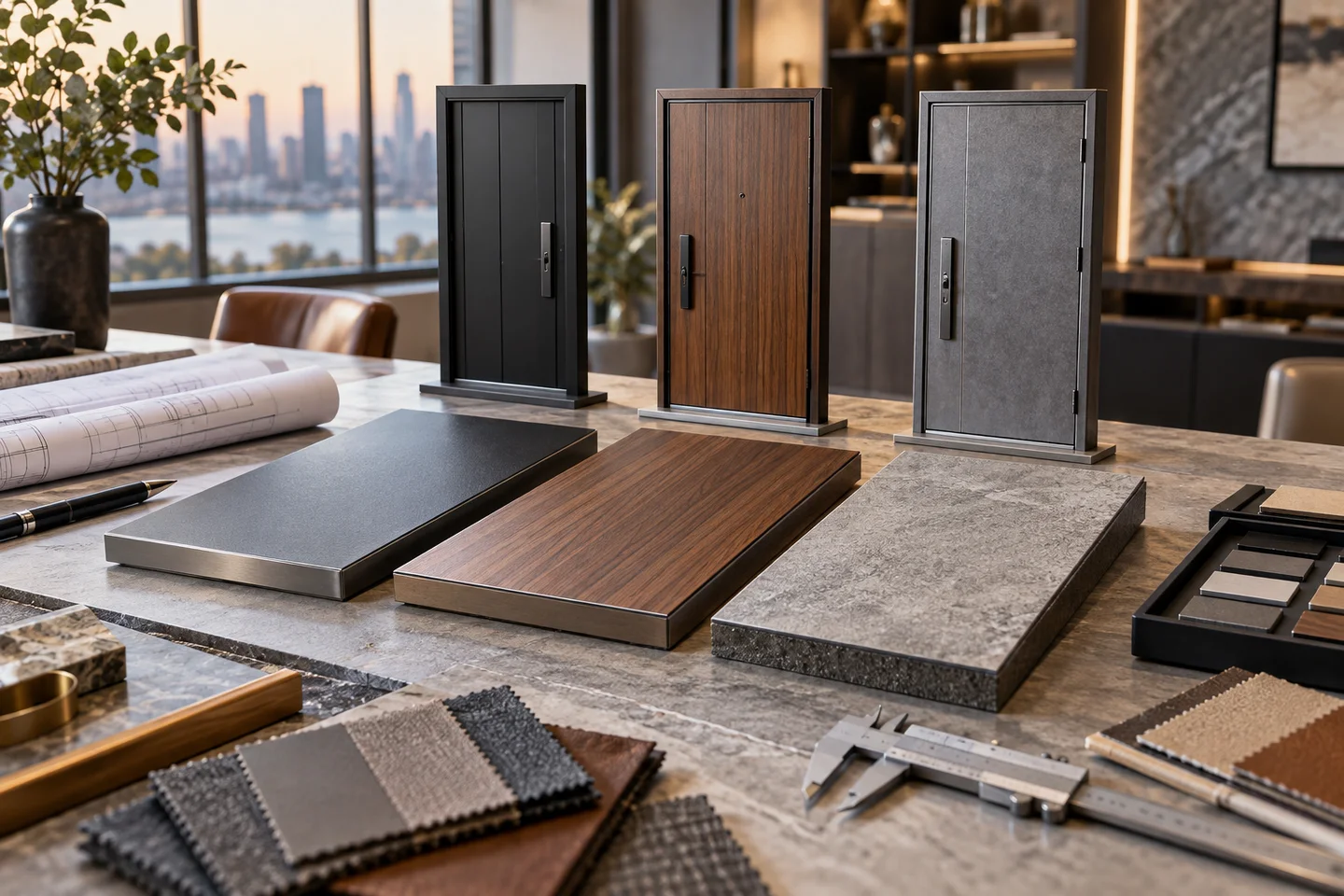
A step-by-step B2B buyer's guide — matching security rating, material, fire, certification and supplier reliability to your market.
For a distributor, developer or project buyer, choosing a security door is not about picking a look — it is about matching security, compliance, climate and supplier reliability to your market. Get it right and you win repeat orders; get it wrong and you inherit callbacks and warranty claims. Here is a practical, step-by-step buyer's guide.
For production scope, customisation and export planning, use this guide together with the WONLY security door manufacturer overview.
Where the scope includes service entrances, plant rooms, offices or other high-traffic openings, review the commercial steel security door specification path before freezing hardware and access control.
1. Start With the Security Rating, Not the Price
The first question is how secure the door needs to be. Specify a verified burglar-resistance rating — the European EN 1627 RC classes or China's GB 17565 grades — instead of a vague “high security” claim. Residential low-rise usually calls for RC2–RC3; commercial and institutional work needs RC4 or higher. Always ask for the test certificate, not just a spec sheet.
2. Match the Material to the Climate and Market
- Cast aluminium — won't rust, near-zero maintenance, sculptural designs; ideal for coastal, humid and premium projects (Gulf, SE Asia, coastal Africa)
- Steel — maximum strength per cost; best for dry, sheltered, value-driven volume work
The wrong material in a salt-air market means rust bleed and returns, so match the metal to the environment before anything else.
3. Add a Fire Rating Where the Building Requires It
Hotels, hospitals, apartment corridors and public buildings usually mandate a fire rating alongside security. Confirm whether your project needs EN 1634 fire performance (for example 60- or 90-minute integrity) before you specify — retrofitting compliance later is expensive.
4. Check Certification for the Destination Market
A door that is compliant in one country may not clear customs or code in another. Confirm the door carries the certifications your market and insurer accept — commonly ISO 9001, CE, UL and regional fire/security approvals — and ask which export codes it already meets (Gulf, SE Asia, Central Asia).
5. Scrutinise the Lock and Hardware
The lock is the most-attacked point. Look for multi-point locking, an anti-drill / anti-bump cylinder, reinforced hinges, and hardware cycle-tested to a high count so it survives years of daily use.
If supplier terminology is unclear, use the lock core vs cylinder comparison to distinguish the keyed cylinder assembly from the lock body and verify the proposed protection.
6. Vet the Supplier, Not Just the Sample
- Track record — years in business, listed or audited status, patents
- Capacity — a real manufacturing base and output, not a trading company
- Range — can they cover residential, fire, commercial and medical in one order
- Support — certification packs, spare parts and after-sales
How WONLY Supports Project and Distributor Buyers
WONLY has built security doors since 1996 and is a listed manufacturer (SSE: 605268) with 1,000+ patents and 30 years without a major safety incident — a real factory, not a trader. Its doors are:
- GB 17565 Class A (highest grade) and EN 1634 90-minute fire-rated, compliant with Gulf, SE Asia and Central Asia codes
- 200,000+ cycle tested and forced-entry tested; certified to ISO 9001/14001, CE, UL, CMA and CSPA
- Available across a full range — X70 robotic, 4.0 Global Series, K300 Pro, Engineering Fire Doors and Medical-Grade — so one supplier covers villas, projects and institutions
FAQ
What is the single most important factor when choosing a security door? A verified burglar-resistance rating (EN 1627 or GB 17565) matched to the real risk level — everything else builds on that.
Should I buy aluminium or steel? Aluminium for coastal, humid and premium projects; steel for dry, sheltered, value-driven volume work.