Buying Guide
EN 1627 RC2 vs RC3 vs RC4: Which Security Door Grade Do You Need?
3 August 2026
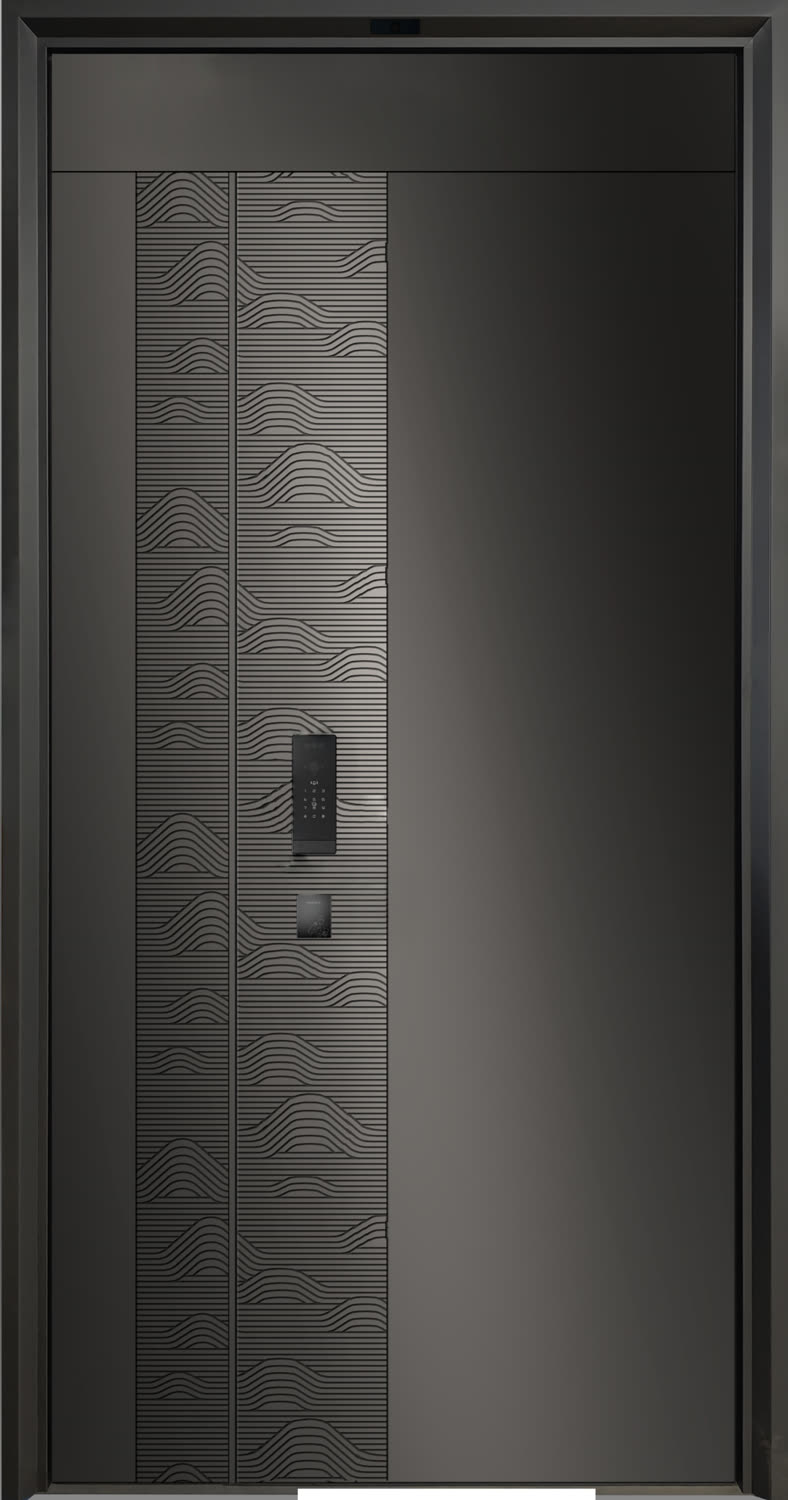
What RC2, RC3 and RC4 actually resist, which projects each grade suits, and how to avoid over- or under-specifying burglar resistance.
EN 1627 gives buyers a shared language for burglar resistance. RC2 is the usual baseline for protected residential entrances, RC3 adds resistance to an experienced attacker using a crowbar, and RC4 addresses higher-risk openings attacked with heavier tools. The class must be proven on the complete doorset, not inferred from the leaf or lock alone.
EN 1627 RC2 vs RC3 vs RC4: Quick Comparison
- RC2: approximately 3 minutes of net tool-contact time with basic hand tools; suited to lower-risk, protected residential openings.
- RC3: approximately 5 minutes with additional leverage tools; commonly specified for exposed apartments, villas and townhouses.
- RC4: approximately 10 minutes with saws, hammers, axes and cordless drills; intended for high-value or critical openings.
These are laboratory resistance periods inside a defined test sequence, not a guarantee that every real attack will last only that long.
EN 1627, EN 1628, EN 1629 and EN 1630: What Is the Difference?
EN 1627 provides the requirements and resistance-class system for burglar-resistant pedestrian doorsets, windows and related building products. The supporting test methods measure different parts of performance:
- EN 1628 — resistance under static loading
- EN 1629 — resistance under dynamic loading
- EN 1630 — resistance to manual burglary attempts
A buyer should therefore look for a classification and supporting evidence covering the complete doorset, rather than treating one manual-attack time as the whole EN 1627 assessment. The current 2021 series also makes clear that locks and cylinders are components of the tested construction; they do not receive an EN 1627 doorset class on their own.
What Each Class Actually Resists
- RC2 — an opportunist with screwdriver, pliers and wedges; the door must hold about 3 minutes. The baseline for apartments and low-risk residential.
- RC3 — an experienced burglar who adds a crowbar; about 5 minutes of resistance. The sweet spot for villas, ground-floor homes and townhouses.
- RC4 — a prepared attacker with saw, hammer, axe and cordless drill; about 10 minutes. Specified for high-value residential, light commercial and institutional entries.
The Cost Curve Is Not Linear
Each step up adds reinforcement — thicker cores, more locking points, stronger frames and tested cylinders — so weight and cost climb faster than the class number. Over-specifying RC4 across a whole residential project wastes budget; under-specifying RC2 on an exposed villa invites claims. Match the class to the opening's real exposure, not to a blanket rule.
How to Decide, Opening by Opening
- Apartment entrance inside a secured lobby → RC2 is usually sufficient
- Villa, townhouse or any ground-floor street-facing entrance → RC3
- Penthouse, executive residence, bank, server room, pharmacy → RC4 or above
- Check local code and insurer requirements first — some markets mandate a minimum class
Ask for the Test Report, Not the Claim
An RC class is only real if the whole doorset — leaf, frame, hinges, lock and cylinder — passed the test together. Ask the manufacturer for the EN 1627 test certificate and confirm the tested configuration matches what you are ordering. WONLY doors are engineered to China's GB 17565 Class A (the highest grade) and tested for forced entry, with 16-bolt four-edge locking and a patented anti-drill cylindrical core; full test documentation is available for export projects.
Use this certificate check before approving a supplier:
- Product name, manufacturer and report holder match the offer
- RC class applies to the complete opening type being purchased
- Leaf and frame construction match the proposed bill of materials
- Maximum tested size covers the scheduled opening
- Hinges, lock, cylinder, protective hardware and glazing match the tested configuration
- Opening direction, anchors and wall interface remain within the evidence scope
- Any access-control preparation or cable route is documented and approved
Airports and Access-Controlled Facilities
Airport staff entrances, operations rooms, plant areas and other controlled zones cannot be specified by RC class alone. The project team should map RC2, RC3 or RC4 to each opening, then coordinate frame anchors, panic or escape hardware, electronic locking, door contacts, fire-alarm release and power-loss behaviour. Use the commercial steel security door project workflow to document those interfaces, and verify that access-control preparation does not move the supplied doorset outside its tested configuration.
FAQ
Is RC3 enough for a villa? For most residential risk profiles, yes — RC3 is the standard recommendation for street-facing homes. Escalate to RC4 for high-value contents or isolated locations.
Can I mix classes across one project? Yes — and you should. Specify by exposure: RC2 for protected interior entrances, RC3 for perimeter units, RC4 for critical rooms.
Does EN 1627 test only the lock? No. It classifies the burglar resistance of the complete construction. The lock and cylinder contribute to performance but cannot prove the doorset class by themselves.
For an opening-by-opening review, send the risk zones, door schedule, wall construction, hardware and access-control requirements through the WONLY project enquiry form.