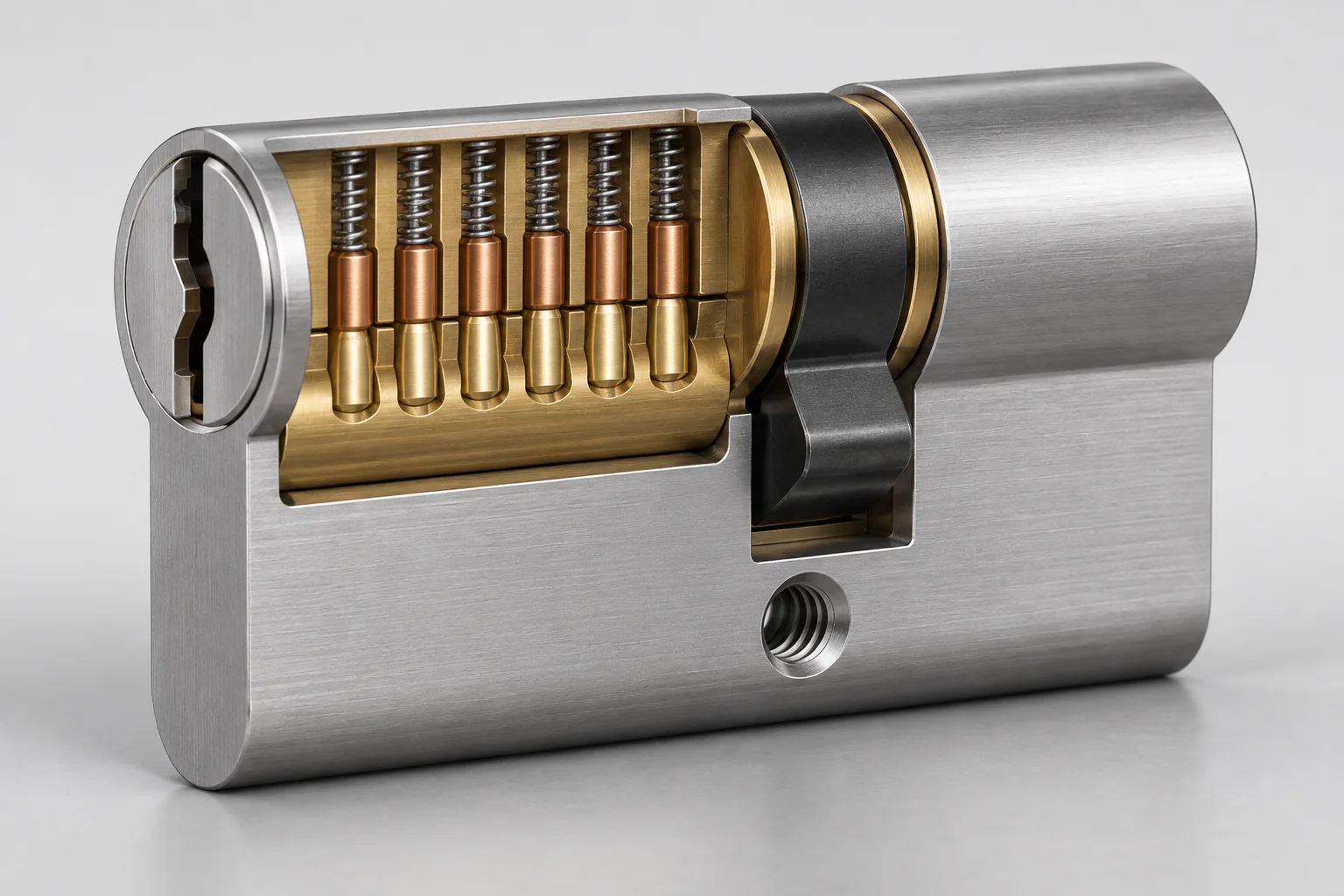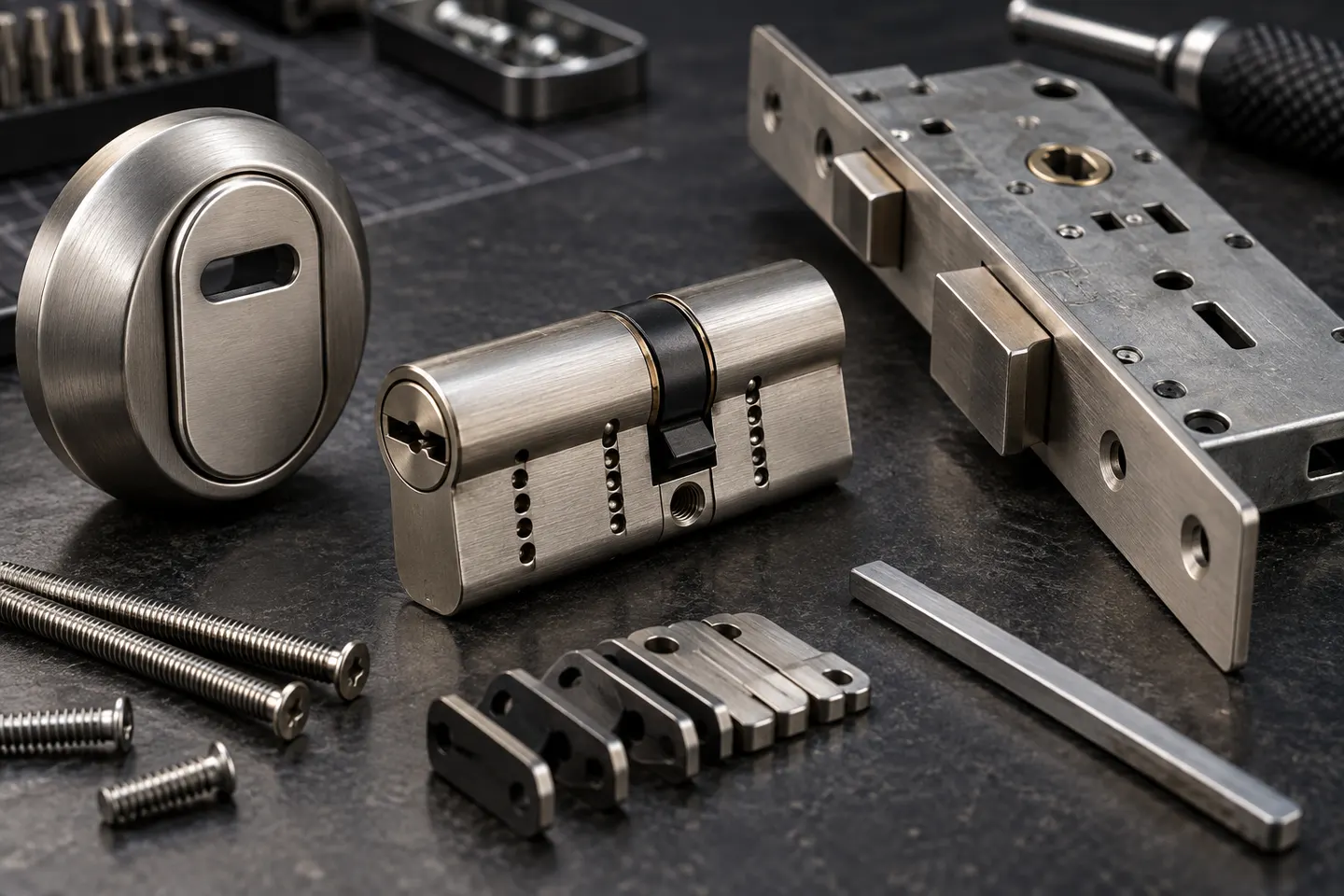
The cylinder is often the first point attacked because defeating it may expose the lock body. Anti-snap and anti-drill claims must therefore be assessed as part of the installed cylinder, escutcheon, lock and door—not as isolated catalogue features.
Why This Must Be Specified Opening by Opening
A project requirement is useful only when it identifies the opening, intended use, performance target, tested configuration and party responsible for approval. Generic catalogue language cannot resolve different risk zones, wall conditions, hardware sets or operating logic.
Project Specification Checklist
- Projection: Measure how far the fitted cylinder projects beyond the protective hardware; excess projection creates a gripping point.
- Break protection: Review sacrificial or reinforced geometry and what remains protected after an attempted snap.
- Drill resistance: Confirm the location and material of hardened elements around the plug, pins and fixing point.
- Manipulation: Separate picking, bumping and destructive attack evidence instead of treating one claim as proof of all.
- System fit: Check escutcheon strength, fixing direction, lock-body interface, key management and authorised replacement.
Evidence to Review Before Purchase
- Cylinder attack test evidence
- Installed section drawing
- Escutcheon and fastener specification
- Keying, replacement and spare-parts plan
Match every report to the exact product proposed. Check dimensions, opening direction, leaf and frame construction, hardware, seals, anchors and supporting wall. Record any difference and obtain formal acceptance before production.
Common Failure Modes
The most common failures are choosing a rating by habit, approving a certificate for another configuration, changing hardware after testing, ignoring the wall interface and leaving commissioning until handover. An opening schedule and evidence matrix expose these gaps while they can still be corrected.
What to Include in the RFQ
Send the destination, project type, door marks, quantities, finished openings, wall construction, required standards, hardware and access-control schedule, finishes, delivery stages and documentation list. This lets the supplier respond with a configuration rather than an unsupported headline claim.
Related WONLY Resources
FAQ
Is a supplier declaration enough? No. Request evidence that covers the proposed complete assembly and have it reviewed by the responsible designer and authority.
Can hardware be changed after approval? Only when the evidence or responsible authority permits the substitution. Treat every change as a configuration review.